


Ayurvedic yoga for Kapha dosha


In the previous blog post I outlined how to balance out kapha dosha with diet and lifestyle tips and hacks. (You can revisit the post here).
This time I am going to outline yogic practices to take on board for this time of year.
Change is good
Our diet and routines should change with the seasons, and this includes how we move our bodies. Movement this time of year can and should be more dynamic than in other times. BUT we also want to take into account your personal constitution (which is where someone like me can aid and assist you in finding the best program for YOU).
Generally speaking, we are countering:
the stagnant, dense, heavy and cold energy of kapha dosha
with lightness, buoyancy, warmth, and dynamism.
Also - remember that the seat of kapha in the body (the place kapha likes to take up residency) is in the chest, upper back, neck, and head. This is precicely why prananyama practices and inversions are hightly encouraged this time of year.
Lymphatic drainage: what it all about?
Lymphatic draininge is getting some good PR right about now. What's all the fuss about?
The lymphatic system is linked to your immune system. Lymph is a clear liquid that contains white blood cells. It sweeps into tissues, picks up bacteria, debris, and toxins, and moves them out of the body. The lymphatic system also maintains fluid balance in the body and transports immune cells.
The heart pumps blood around the body, but there is no pump which moves the lymph. To move lymph requires skeletal muscular contractions - movement and breathing.
I hear yoga is good for that ;)
So to help our immune system to work at its optimum, we need to move it or lose it!
Āsanas for Kapha dosha
This is a great time of year for Ashtanga, Power Flows, Rocket Vinyasa, and Hot Yoga. Think of dynamic practices that raise your heartbeat and may make you break a sweat.
Surya Namaskars (Sun Salutations)
can be any variation, done 3-5x (or more if you feel so inclined!)
I personally mix it up: I start with one full round of a traditional Hatha variation, and then 3 rounds of Surya A from the Ashtanga tradtition, followed by a round or 2 of Surya B. By then end of it (which only takes 10-15 mins) my heart is pumping, my breath is deepend, but I have not overexerted myself.
Starting slow and finding momentum and gradually warming up the body is the perfect antidote to kapha's sluggishness

What postures do you want to favor?
Since kapha sits in the chest and upper back, go for heart openers, shoulder openers, back bends. Finding expansion and making space in the ribcage.
Marjariasana - Cat/Cow

Adho Mukha Svanasana - Downward Facing Dog

Urdha Mukha Svanasana - Upward Facing Dog

Bhujangasana - Cobra

Balasana - Childs Pose

Ustrasana - Camel pose

Shalabasana - Locust Pose

Dhanurasana - Bow Pose

Setu Bandhasana - Bridge Pose

Inversions
An inversion is classed as anything that brings the head below the heart and the hips
This includes Adho Mukha Svanasana (Downward Facing Dog) and Setu Bandhasana (Bridge Pose). It also includes:
Sarvangasana - Shoulder Stand

Sirsasnana - Head Stand

Pincha Mayaurasana - Forearm Stand
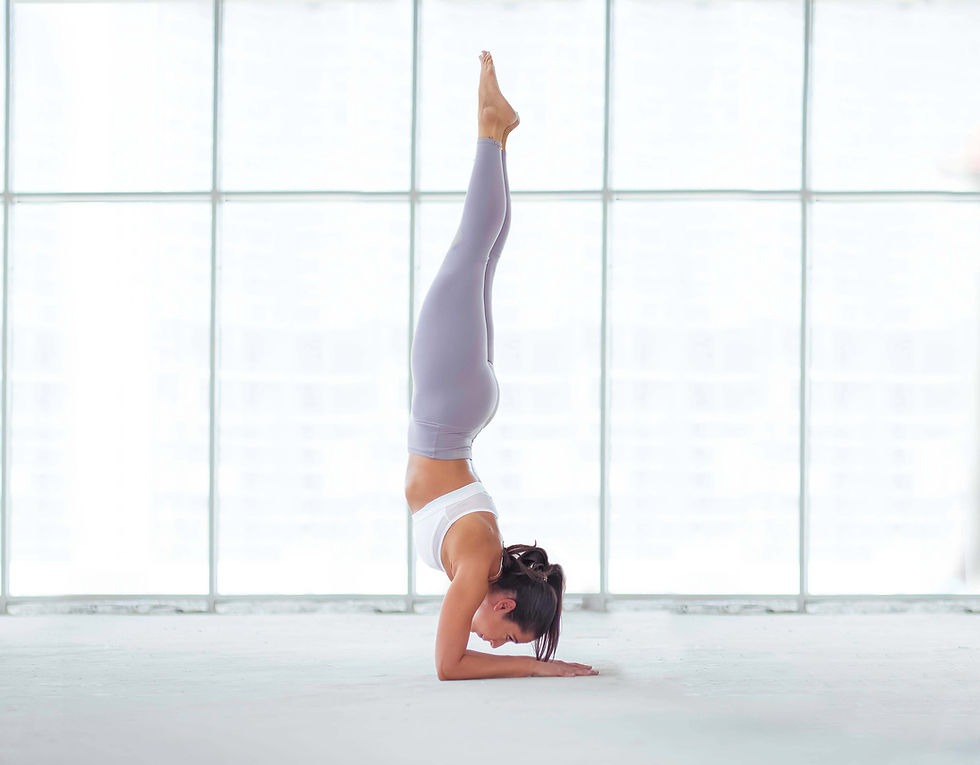
You get the idea.
If feats of acrobatics is not your speed, you can simply pop your legs up the wall and place a cushion underneath your low back and hips to elevate them slightly
Viparita Karani - Legs Up the Wall Pose

The benefit is the same!
But what are the benefits of inversion?
Physical Strength and Balance: Poses like headstands and handstands strengthen the shoulders, arms, and core, while improving balance and body awareness.
Cardiovascular and Lymphatic System Health: Inversions allow blood to flow easily to the heart and brain, reducing fatigue. They also stimulate the lymphatic system to remove toxins and reduce swelling in the legs and feet.
Nervous System Regulation: Inversions can be energizing (e.g., handstands) or calming (e.g., Legs Up the Wall), helping to reduce anxiety and stress.
Spinal Decompression: They help stretch the spine and relieve tension in the back and shoulders.
Mental Clarity and Perspective: Going upside down challenges your routine, building focus, confidence, and a new, often more relaxed, perspective on life
Prānāyāma: Breath Expansion
Practicing pranayama at any time of year is recommended, but it it really beneficial in the winter months.

There are many different types of practices, each having their own effect.
For the winter months, we want to bring in warming practices like:
Kapalbhati - Shining Skull breath
Bhastrika - Bellows breath
Ujjayi - Victorious breath
Surya Bhedana - Sun breath or Right Nostril breathing
And keep those practices which help to regulate the nervous system:
Nadi Shodhanah - Alternate Nostril breathing
Dirga Pranayama - Three Part breath
Inhal3 for 4, exhale for 6 or 8 counts (Longer exhales stimulate the Vagus nerve)
*** It is important to note that if you have never tried pranayama before, seek out a knowledgeable teacher to guide you
So, for a well-rounded kapha balancing yoga practice, I would recommend:
Start seated or standing. Take a few moments to connect with yourself and with your breath
Start Ujjayi breath to build inner heat and bring the mind to focu on the saund of the breath
Some warm ups - move the spine (Cat/Cow), ingnight heat from the core (Plank Pose, Hovering Tabletop, Boat Pose, etc.)
A few rounds of Surya Namaskar - feel the heartrate increase gently and warmth circulating through the body
Some Standing postures like Warrior 1, 2 or 3, Triangle pose, Extended Side Angle, etc. Anything that builds strength through the legs. Option to add vinyasas between the poses to keep it heating
Seated postures you want to include are your chest openers and backbends
Inversion practice (always towards the end)
Find a comfortable seat with the spine nice and tall to begin pranayama
If you want a pranayama sequence, start with kapalbhati, the move to bhastrika, and finish with nadi shodhana
Or just dirga pranayama
Sit in stillness for a few minutes or Savasana - DO NOT SKIP!
Hari Om,
Jenny xx
You can join me online for Ayurvedic yoga every Wednesday at 9:30 - always seasonally appropriate practices to keep the doshas in check!!


Comments